
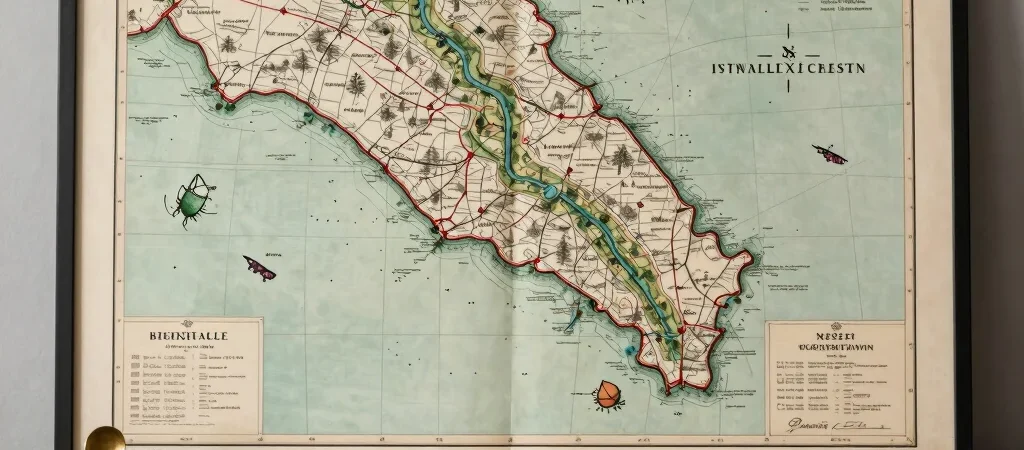
In the early 1820s, a charismatic Scottish officer named Gregor MacGregor arrived in London claiming to be the Kazike of Poyais, a lush Central American principality boasting fertile soil, gold-laced rivers, and an eager native population. He produced detailed guidebooks, mint banknotes, and land certificates, enticing hundreds of settlers and wealthy investors to stake their fortunes on this tropical utopia.
A Paradise Built on Pure Imagination
When two ships carrying eager Scottish emigrants finally made landfall in the Bay of Honduras, they found no paved boulevards or marble government palaces. Instead, they stepped off onto a mosquito-infested swamp devoid of a single European building or agricultural settlement. Over half the colonists perished from malaria and starvation before help arrived, yet MacGregor managed to flee to Paris and attempt the exact same scheme again.
The Psychology of the Grand Illusion
What makes the Poyais scheme one of history's most fascinating anomalies is how effortlessly MacGregor exploited the era's colonial hubris and financial greed. London's financial district was so eager to capitalize on South American independence that basic due diligence was brushed aside in favour of sparkling promises.
Why We Still Fall for Paper Kingdoms
While we like to imagine ourselves far more sophisticated than nineteenth-century aristocrats, modern finance regularly produces its own version of Poyais. From speculative digital assets to revolutionary tech startups that turned out to be hollow boxes, the fundamental mechanics of the grand swindle remain remarkably unchanged.