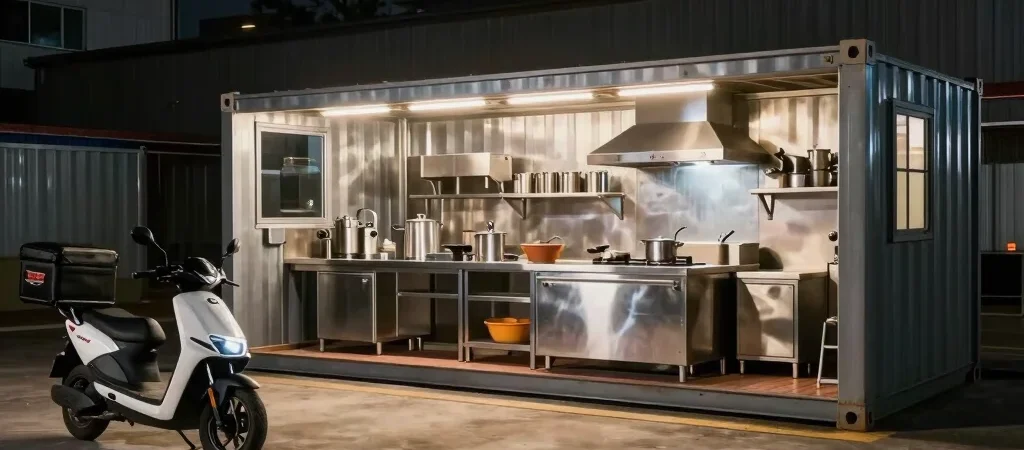
Scroll through your favourite food delivery application in central London and you will find an endless variety of artisanal burger bars, authentic ramen shops, and gourmet salad kitchens. What the glossy food photography conceals is that six of those supposedly distinct eateries are often preparing their dishes inside the exact same windowless metal pod parked in an industrial estate.
The Illusion of Infinite Choice
Known in the trade as dark kitchens or ghost facilities, these high-density food production units use algorithmic demand forecasting to launch or fold digital restaurant brands overnight. A single operator can run a dozen virtual storefronts using identical pre-cooked ingredients, simply swapping the takeaway box packaging and changing the online menu titles.
While optimized logistics and lower commercial rents make business sense on paper, the model fundamentally alters our relationship with local food culture. Consumers pay premium prices for perceived culinary craft, unaware that their wood-fired pizza and truffle fries were assembled minutes apart by the same overworked line cook under fluorescent tube lighting.
Spotting the Virtual Front
Unravelling these phantom kitchens requires a quick look at the small print. Checking company registration details or matching council hygiene ratings usually reveals whether that neighbourhood bistro actually possesses a physical dining room or just a padlocked door behind a railway arch.
The Future of Independent Dining
As platform algorithms favour scale over heritage, genuine independent kitchens face mounting pressure to adopt the same synthetic marketing tactics. Supporting real food culture requires looking past optimized app banners and demanding transparency about where our dinners are actually cooked.